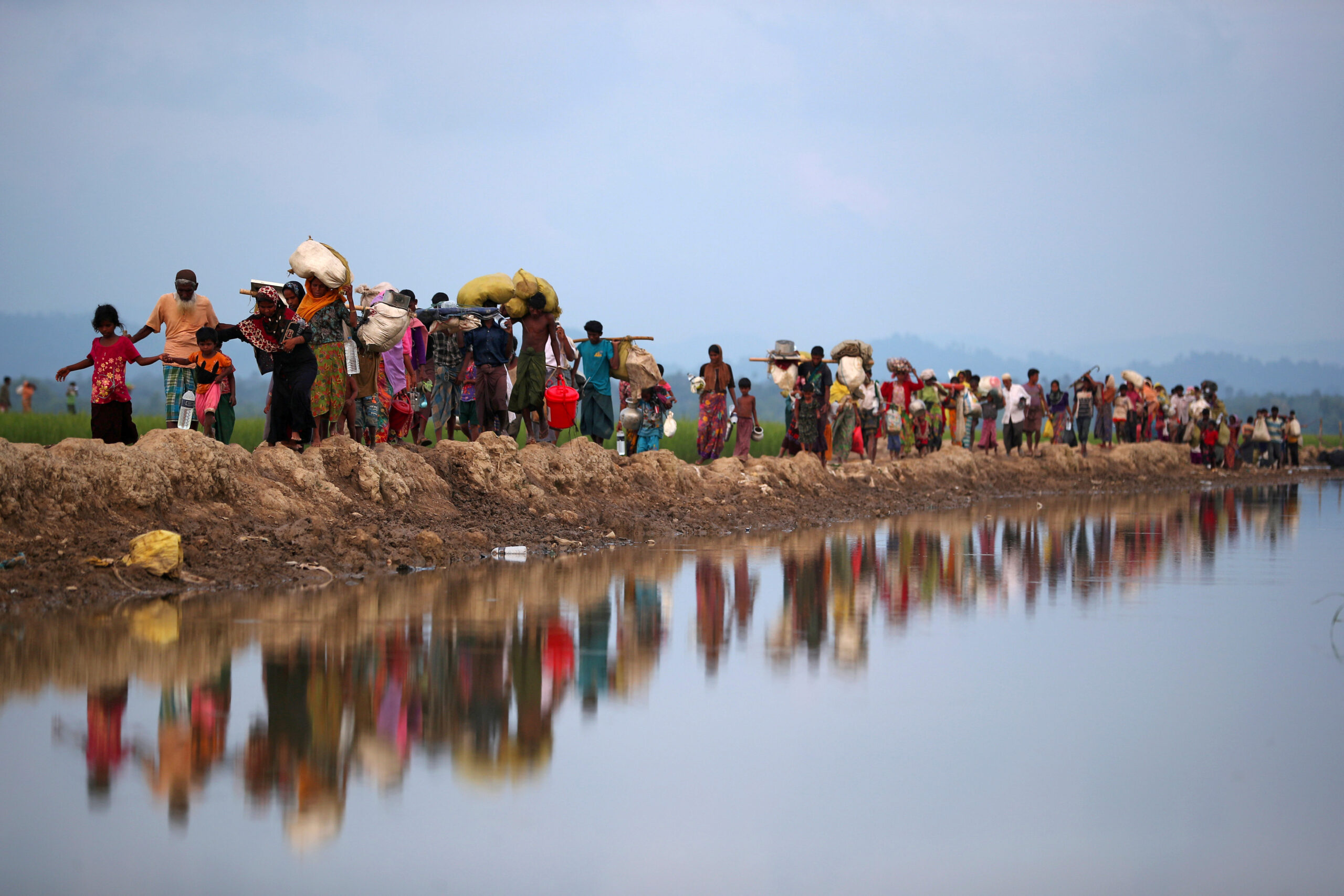
Cox’s Bazar, Bangladesh — March 2025
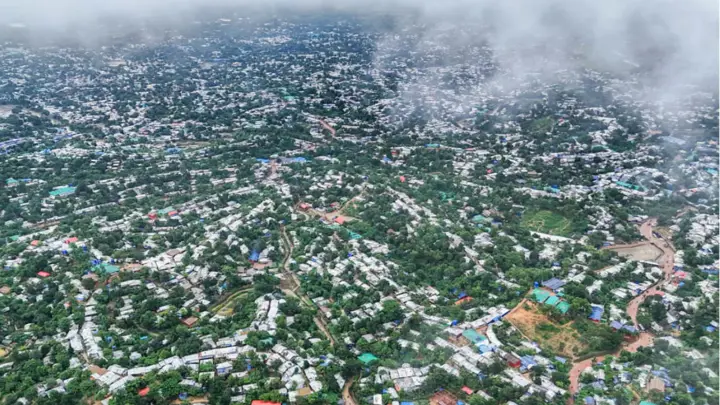
More than 1.1 million Rohingya refugees in Cox’s Bazar, Bangladesh, are observing Ramadan this year under conditions of acute food insecurity, as repeated cuts to humanitarian aid rations have left families struggling to secure even basic meals during the holy month.
The World Food Programme, which provides the primary food assistance to refugees in the Kutupalong and Nayapara settlements together forming the world’s largest refugee camp complex has reduced rations multiple times in recent years due to severe global funding shortfalls. Fresh food supplements once distributed to the most vulnerable households, including widows, orphans, the elderly, and people with disabilities, have largely been discontinued.
“This year, I have not received any support,” said Hamida Khatun, 52, a widow raising eight children in the Kutupalong settlement. “Before, we had fresh food every month. Now it has completely stopped.”
Khatun described breaking her Ramadan fast at suhoor with dry fish and lentils. What the evening iftar would bring, she said, she did not know.
Her account reflects conditions reported across the camps, where most families now subsist primarily on dry rice and lentils. Protein, fresh vegetables, and nutritionally adequate food have become unaffordable for a population barred from formal employment and restricted in movement under Bangladeshi policy.
Nearly Nine Years Without a Path Home
Khatun is among more than 740,000 Rohingya who fled to Bangladesh during the Myanmar military’s 2016–2017 operations in Arakan state a campaign documented by Human Rights Watch, Amnesty International, and United Nations investigators as ethnic cleansing and, by multiple international bodies, as genocide.
Nearly nine years after that mass exodus, no safe and voluntary repatriation pathway has been established. Legal proceedings brought by The Gambia against Myanmar at the International Court of Justice continue, and the International Criminal Court maintains an active investigation. However, the conditions required for dignified return including legal recognition, restoration of citizenship, security guarantees, and access to land — have not been met.
Inside the camps, refugees face no formal right to work, severely restricted freedom of movement, limited access to education, and near-total dependence on humanitarian assistance that is itself declining.
Funding Gap Deepens Vulnerability
Aid workers and humanitarian officials have warned that continued funding shortfalls risk pushing already vulnerable households into deeper food insecurity, with children under five, pregnant women, and elderly persons identified as most at risk.
Ramadan has intensified the visible impact of the cuts. In a population where fasting is near-universal, the absence of nutritionally adequate food before dawn and at sunset carries immediate health consequences, particularly for children and nursing mothers.
Across the camps, iftar meals frequently consist only of rice and thin lentil soup. Dates, fruit, milk, and protein — common features of Ramadan tables across the Muslim world — are beyond the reach of most families.
Humanitarian organisations operating in Cox’s Bazar have issued renewed calls for international funding, urging Muslim communities worldwide to direct zakat and sadaqah contributions toward verified agencies supporting Rohingya refugees.
No Resolution in Sight
The broader political situation offers little immediate prospect of relief. Conflict between armed groups and the Myanmar military has continued in Arakan state, producing further civilian casualties and displacement, and making conditions for safe return more remote.
Bangladesh, which hosts the refugee population on what was intended as a temporary basis, has maintained restrictions on Rohingya integration into the national economy and society, leaving the population in a state of prolonged and deepening dependency.
For Hamida Khatun and the more than one million refugees sharing her circumstances, the question is not one of politics or legal timelines. It is immediate and daily.
“Today I fasted after eating suhoor with dry fish and lentils,” she said. “I don’t know what I will manage tomorrow.”
Reporting contributed from Cox’s Bazar. The World Food Programme and UNHCR continue to appeal for emergency funding for Rohingya refugee assistance.